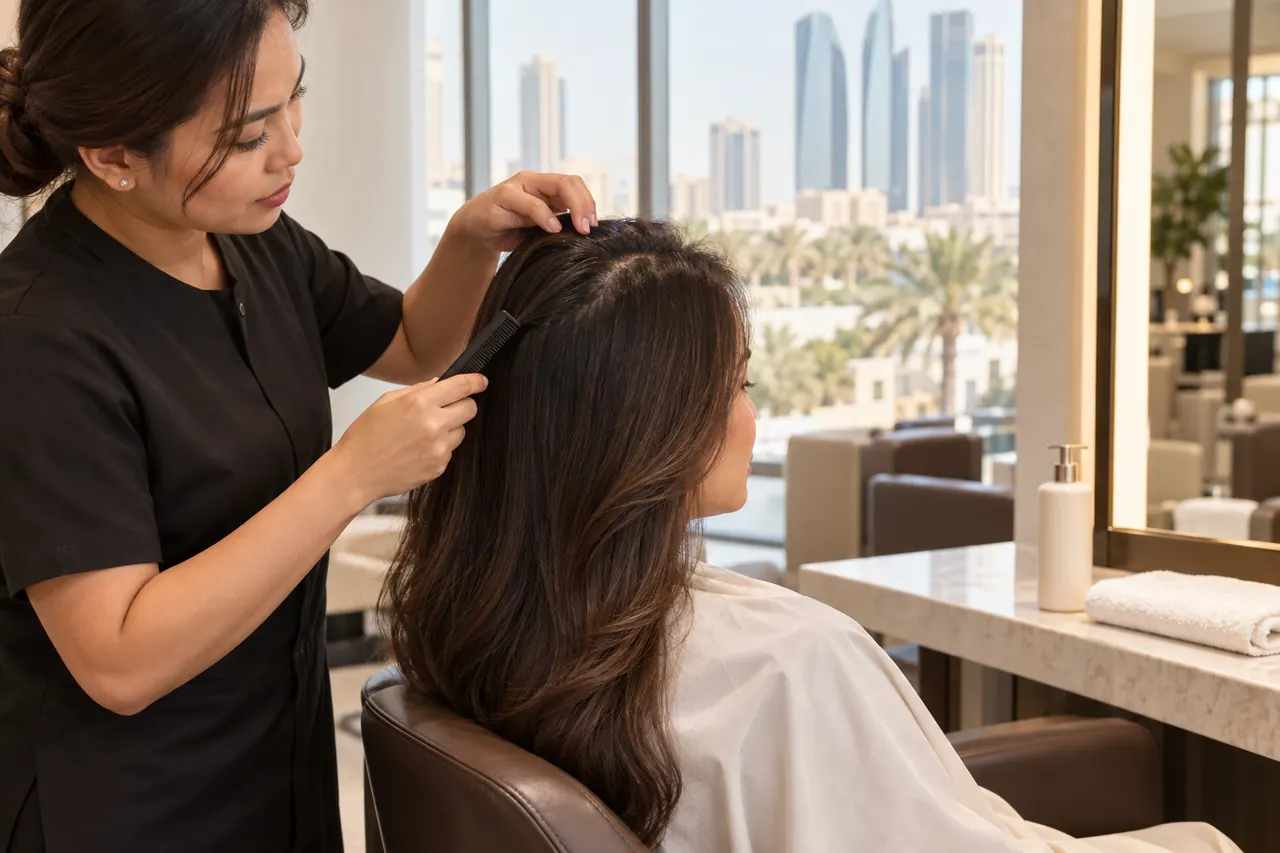
Protein Treatment for Roots Aftercare and Maintenance Tips
If you are a Filipino woman in Abu Dhabi trying to keep treated roots from turning dry, stiff, greasy, or heavy, the most useful starting point is simple: a protein treatment is a strengthening step, not a reason to keep adding more heavy products at the scalp. The routine that usually makes the most sense is to restore moisture, keep the root area light, and avoid repeating strong protein too soon.
Naz Beauty Salon offers Protein Treatment — Roots as part of its hair services in Abu Dhabi. This guide explains what a protein treatment is meant to do, how root aftercare differs from caring for the rest of the hair, what mistakes can make roots feel worse, and what to compare before booking the treatment again.
What a protein treatment is trying to do
A strong protein treatment is designed to reinforce weak hair. ApHogee describes its Two-Step Protein Treatment as a protein-rich treatment that fuses into the hair with heat to reduce signs of breakage and damage. See ApHogee Two-Step Protein Treatment product details.
That makes it different from a simple conditioning routine. It is also not the same thing as bond-repair care. OLAPLEX explains that its bond-building treatment is protein-free and is intended to relink broken bonds, while also noting that protein treatments can contribute to buildup or protein overload when overused. See OLAPLEX on protein free bond repair.
For a root-focused service, the practical point is this: the hair near the scalp may need strengthening, but the scalp area also shows buildup quickly. That is why aftercare should support strength without making the roots coated or stiff.
Why root aftercare should feel lighter than care for your lengths
Roots and new growth sit close to the scalp, where sweat, oil, and product buildup are noticed faster. Mid-lengths and ends are older parts of the hair and often need more softness and slip because they have had more exposure to brushing, heat, colour, and friction.
So after a root protein treatment, a balanced routine often means lighter care at the scalp and more moisture through the rest of the hair. That does not mean ignoring the roots. It means avoiding the common mistake of piling rich creams, oils, or repeated protein products onto the same area too soon.
For example, a Filipino reader in Abu Dhabi who commutes in the heat, ties her hair back for work, and washes more often after humid days may find that her roots get coated faster than her lengths. In that situation, keeping the scalp area cleaner and lighter while moisturizing the rest of the hair is often a more practical approach than adding more rich product at the top.
The first rule after treatment is moisture balance
ApHogee's official guidance is clear that moisture should follow the protein step. Its use guide says to rinse the treatment thoroughly, then apply Balancing Moisturizer to restore softness and elasticity. See ApHogee guide to using Two Step Protein Treatment. The product directions also say the moisturizer is applied to damp hair and gently massaged into the hair and scalp. See ApHogee Balancing Moisturizer directions.
That is the most important aftercare idea in this topic. Protein alone is not the finish line. If the strengthening step is not followed by moisture support, the hair can feel harder instead of healthier.
A simple aftercare routine for treated roots
Right after the treatment
The strongest supported approach is to complete the treatment properly, rinse it thoroughly, and follow it with moisture-balancing care. ApHogee also warns not to manipulate the hair while the treatment has hardened, because that can cause breakage. See ApHogee aftercare and processing guidance.
For the next washes
The American Academy of Dermatology recommends a gentle shampoo and a moisturizing conditioner for fragile or damaged hair. It also advises keeping leave-in conditioner mainly on the hair rather than the scalp, because leave-in products on the scalp can lead to buildup or irritation. See AAD hair care tips for fragile hair and AAD advice on using leave in conditioner.
A practical routine usually looks like this:
- cleanse with a gentle shampoo when the scalp needs washing
- use moisturizing conditioner after shampooing
- keep rich leave-ins and creams mainly on the mid-lengths and ends rather than the scalp
- focus on moisture between protein treatments instead of repeating more strength care immediately
How soon can you wash your hair after a protein treatment
The available primary sources do not give one universal official waiting rule for the next shampoo after a protein treatment. What they do document clearly is that the service itself includes cleansing, treatment application, rinsing, then a moisturizing step. See ApHogee step by step treatment instructions.
So the most useful supported takeaway is to complete the process as directed and then follow the aftercare advice given for your hair condition. If your hair is also colour-treated, chemically processed, or already feeling brittle, it makes sense to get treatment-specific guidance before assuming the same wash timing works for everyone.
Which products make the most sense after a root protein treatment
The clearest evidence supports a moisture-balancing direction, not a heavy or protein-stacked routine. ApHogee calls Balancing Moisturizer a must-use second step, and OLAPLEX notes that protein treatments can contribute to buildup or overload when overused. See ApHogee Balancing Moisturizer and OLAPLEX explanation of protein overload and buildup.
The American Academy of Dermatology also supports gentle shampooing, moisturizing conditioner, and careful placement of leave-in products away from the scalp. See AAD guidance on managing fragile hair.
That means the best-supported choices are usually:
- moisturizing follow-up care after the treatment
- gentle cleansing as needed
- lighter product placement at the roots
- more conditioning support on the lengths and ends
Products that commonly need more caution at the roots include heavy leave-ins, creams, and repeated strength-focused products used too close together. AAD also advises avoiding hot-oil treatments for fragile hair. See AAD advice on fragile hair care.
How often should you repeat a root protein treatment
The clearest documented interval in the available sources is every 4 to 6 weeks, depending on hair maintenance and damage level. See ApHogee FAQ on protein treatment frequency. The same guide also says overuse can cause stiffness and breakage. See ApHogee use guide on overuse.
That does not mean every person should repeat the service on a fixed calendar. It means strong protein care is not something to keep redoing just because the hair feels imperfect on one day.
How to tell when hair may need moisture instead of more protein
ApHogee describes strong protein treatment as useful when hair feels weak, overly soft, or stretchy when wet, especially after chemical or heat stress. It also warns that overuse can lead to stiffness and breakage. See ApHogee guide to when the treatment may be useful.
That gives a practical comparison:
- Hair may be asking for strength when it feels weak, overprocessed, or too stretchy when wet.
- Hair may be asking for more moisture or less protein when it starts feeling stiff, rough, brittle, or harder to manage after treatment.
This distinction matters in Abu Dhabi, where heat, sun exposure, frequent washing, and air conditioning can make dryness easy to confuse with weakness. Sometimes the better fix is moisture balance and lighter root care, not another strong treatment.
Common mistakes that make treated roots feel worse
| Mistake | What can happen | Better approach |
|---|---|---|
| Skipping the moisturizing step | Hair may feel hard or dry | Follow the protein step with moisture-balancing care |
| Repeating strong protein too often | Stiffness or extra breakage | Space treatments out and reassess before repeating |
| Manipulating hair while the treatment is hard | Breakage during processing | Leave the hair alone until the treatment is rinsed out |
| Putting rich leave-ins on the scalp | Greasy or coated roots and buildup | Keep heavier products mainly on the lengths and ends |
| Using too much heat soon after | Extra dryness and stress | Keep styling gentler for a few days when possible |
| Wearing hair too tightly too often | Extra tension at the root area | Choose looser styles when possible |
These points are supported by ApHogee's instructions on moisturizing balance, treatment frequency, and avoiding manipulation while the hair is hardened, together with AAD guidance on leave-in buildup and tension styling. See ApHogee common mistakes and aftercare, AAD leave in conditioner tips, and AAD styling without damage guidance.
Daily habits that make more sense in Abu Dhabi weather
Hot weather and humidity can make roots feel sweaty faster, while the rest of the hair still feels dry. That combination often leads people to overwash the scalp or over-condition the root area.
A more balanced routine is usually more helpful:
- wash when the scalp genuinely needs cleansing rather than layering more product over coated roots
- condition after washing, with most of the richer product going through the lengths
- keep leave-in products away from the scalp unless they are specifically meant for that area
- be mindful of sun exposure and friction from frequent styling
AAD recommends protecting hair from sun with measures such as a wide-brimmed hat, and notes that sun and chlorine can worsen damage. See AAD advice on stopping hair damage and AAD summer hair care advice.
When it makes sense to pause before another treatment
If your hair feels stronger after treatment, that supports the idea that the routine is helping. If it starts feeling harder, rougher, or more brittle, more protein may not be the answer.
It is sensible to pause and get more specific advice first when:
- the hair already feels stiff or brittle
- breakage continues even after repeated strengthening care
- you recently had or are planning colour, bleach, smoothing, or another chemical service
- the scalp area feels uncomfortable or the roots are not responding well to the routine
ApHogee's product directions include separate timing notes around chemical services, and its FAQ says the strong Two-Step Protein Treatment is best applied by people familiar with chemical processes on hair. See ApHogee special directions for chemical services and ApHogee FAQ on who should apply the treatment carefully.
FAQ
How long should I wait before repeating a protein treatment on my roots?
The clearest documented interval in the available sources is about every 4 to 6 weeks, depending on hair maintenance and damage level. See ApHogee FAQ on treatment frequency.
What if my hair feels stiff after a protein treatment?
That can be a sign that your routine needs more moisture or less repeated protein. ApHogee emphasizes restoring moisture after treatment, and OLAPLEX notes that protein overload can contribute to buildup and a rough feel. See ApHogee aftercare guidance and OLAPLEX on protein overload.
Should conditioner go on the roots after a root protein treatment?
In the documented ApHogee system, the balancing step is applied to hair and scalp after the protein treatment. For routine home care later on, richer leave-ins are usually better kept off the scalp to reduce buildup. See ApHogee Balancing Moisturizer directions and AAD leave in conditioner tips.
Can protein treatment help if my hair is weak from colour or heat styling?
Official manufacturer guidance describes strong protein treatments as useful for weak, damaged, chemically treated, or heat-damaged hair. See ApHogee guide to treatment use cases.
What should I compare before booking another root treatment?
Compare how your hair feels now, whether you recently had colour or other chemical services, and whether your main issue is weakness, dryness, or buildup. You can also explore the salon's beauty blog or review its hair services for related options.
Conclusion
The most effective aftercare for treated roots is usually not complicated. Restore moisture after the strengthening step, keep rich products away from the scalp unless they are meant for that area, and avoid repeating strong protein too quickly. In Abu Dhabi, where roots can feel sweaty while lengths still feel dry, lighter care at the top and steady moisture through the rest of the hair often makes more sense than adding more heavy product.
Get the right plan for your next hair appointment
If you are considering a root protein treatment and want to decide whether your hair seems to need strength care, moisture support, or another option, the next useful step is to contact Naz Beauty Salon. Share a few non-sensitive details such as your recent hair services, whether your roots feel coated or dry, whether your lengths feel brittle or stretchy, and what result you want. That can help you decide whether to book Protein Treatment — Roots or ask about another suitable hair service.